

Guava Nematodes: Symptoms, Control and Prevention Tips
Guava leaves turning yellow and branches drying? Learn how to spot root-knot nematodes, use Purpureocillium lilacinum, and protect your guava orchard.
By Admin Published Updated 4 min read

Skip the maths – use the calculator:
Symptoms and Control
Your guava plants are turning yellow, branches are drying, and nothing you spray helps. The problem may be in the roots, not the leaves. Tiny soil worms called nematodes could be the reason.
What Are Nematodes?
Nematodes are very small worms that live in soil. You cannot see them with your eyes. The most harmful one in guava is the root-knot nematode. It enters the roots and makes small lumps called galls. Damaged roots cannot take up water and food, so the plant becomes weak.
A newer type, Meloidogyne enterolobii, is now spreading fast in Indian guava orchards. It is harder to control, often joins with soil fungus to cause guava wilt, and mostly spreads through infected nursery plants. In bad cases, yield can fall by 60 to 80 percent.
Symptoms
On the plant:
Yellow or bronze-coloured leaves
Wilting, even when the soil is wet
Drying branches
Slow growth and weak plants
Fewer flowers and fruits
On the roots:
Dig near a weak plant, take out a few thin roots and wash them. If you see knots or lumps, it is most likely root-knot nematode. For confirmation, send a root and soil sample to your nearest Krishi Vigyan Kendra (KVK).
How to Control Guava Nematodes
1. Plant only healthy saplings
Buy grafts and layers from a trusted nursery.
Check the roots of a few plants before buying.
If you see galls, do not take that batch.
This one step prevents most problems.
2. Use the bio-agent Purpureocillium lilacinum
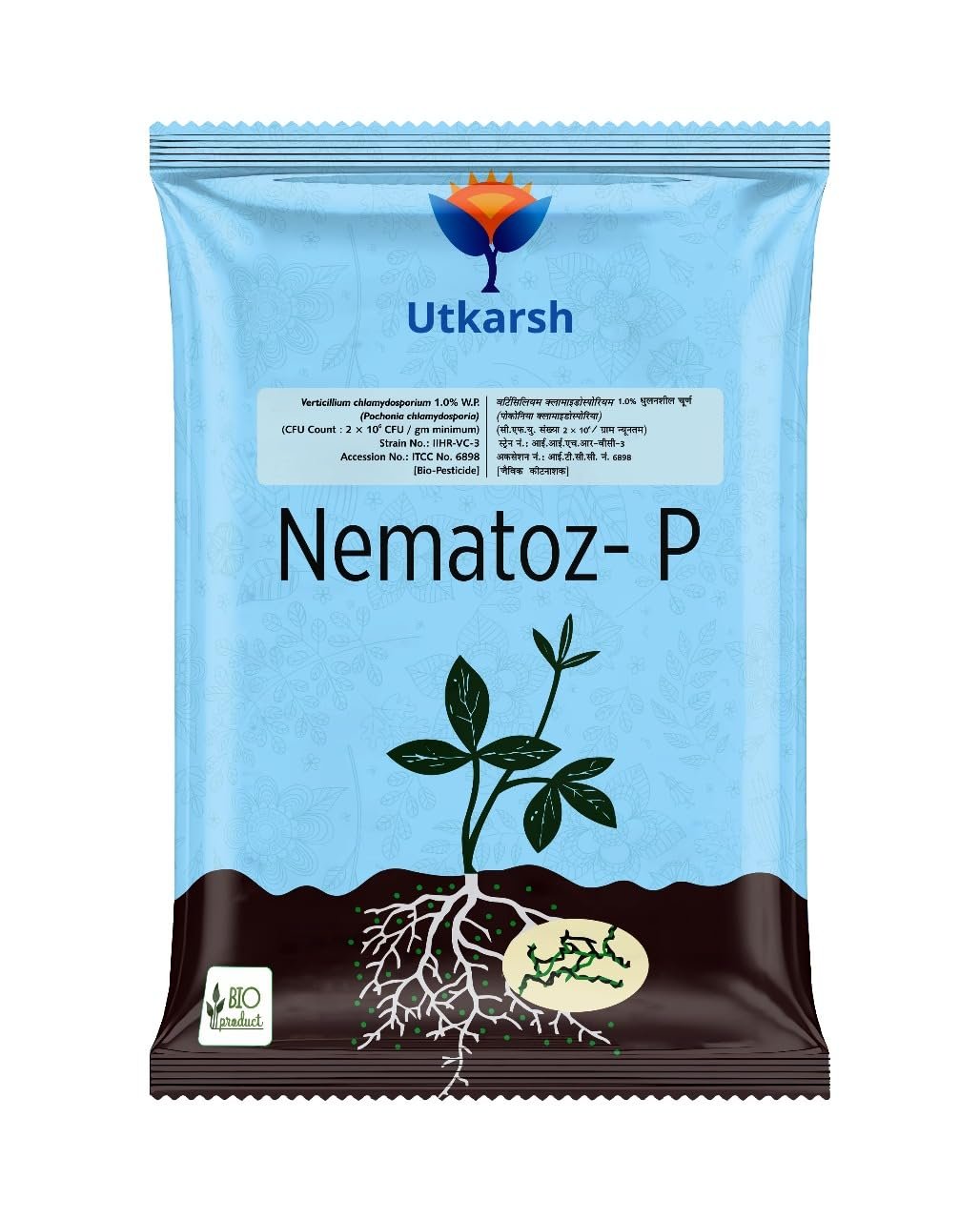
This is a friendly fungus that kills nematode eggs. It is safe for people, animals and soil.
How to prepare:
Mix 1 kg of Purpureocillium lilacinum (also called Paecilomyces lilacinus) into 100 kg of well-rotted farmyard manure (FYM).
Sprinkle water so it is moist, not wet.
Cover and keep it in shade for 2 to 3 weeks.
How to use:
Apply 500 g to 1 kg per plant around the roots.
Mix into the topsoil and water it.
Repeat every 3 months.
Check the expiry date before buying, and do not mix it with chemical fungicides.
3. Chemical control (only if needed)

Old advice says to apply Carbofuran 3G at 60 g per plant when leaves start turning yellow or bronze. Be careful:
Carbofuran is very poisonous to people, birds, bees and fish.
In India, only the Carbofuran 3% CG form is still allowed, and only for crops written on its label.
If guava is not on the label, do not use it. Ask your KVK or agriculture officer for an approved option.
Always wear gloves and a mask when applying.
4. Simple field habits
Add plenty of compost, FYM and neem cake.
Do not grow tomato, brinjal, okra or chilli between guava plants. They increase nematodes.
Grow marigold along the borders.
Keep the orchard free of weeds.
Clean tools after working in an infected area.
Remove and destroy badly infected trees with their roots.
5. Choose tolerant varieties
Studies show Lalit and Allahabad Safeda handle nematodes better than many other varieties. Ask your local horticulture office for advice before planting a new orchard.
Quick Yearly Plan
When | What to do |
|---|---|
Before planting | Check sapling roots for galls |
At planting | Add bio-agent mixed FYM in each pit |
Every 3 months | Apply 500 g to 1 kg bio-agent FYM per plant |
All year | Remove weeds, avoid tomato and okra nearby, clean tools |
When symptoms show | Check roots and contact your KVK |
Common Questions
Can a sick guava tree recover? Yes, if you catch it early. Trees that are badly wilted are hard to save.
Is organic control enough? For prevention and light attacks, yes. For heavy attacks, take expert advice.
Where can I buy Purpureocillium lilacinum? From KVKs, agricultural universities and registered bio-input shops.
Final Word
Nematodes do their damage quietly under the soil. Start with clean saplings, feed the soil well, use bio-agents regularly, and check the roots as soon as plants look weak. Small care today saves years of harvest.
Note: Pesticide rules change. Always read the label and check with your local agriculture office before using any chemical.
This guide explains general methods and is not a substitute for advice from your local Krishi Vigyan Kendra, state agriculture department or a soil testing laboratory. Recommended doses change with crop, variety, soil and season.
Keep reading

Plan Your Room Before You Move a Single Piece of Furniture
Planning a room sounds simple until you start moving furniture around.
· 2 min read
Crop Protection
How to Mix Pesticide Correctly in a 16-Litre Sprayer
Label says "2 ml per litre" or "300 ml per acre"? Here's exactly how to work out the dose per tank, calibrate your sprayer and mix safely – without guesswork.
· 4 min read
Fertilizers & Nutrients
How to Calculate NPK Requirement from Your Soil Health Card
Your Soil Health Card has the numbers – here's how to read them, turn N:P:K doses into bags of fertilizer, and avoid the unit mix-ups that lead to over-application.
· 3 min read